
 English
 English
 عربى
عربى 한국어
한국어
Industrial Wall Mounted Oscillating Fan
The Industrial Wall Mounted Oscillating Fan is a versatile and efficient cooling...
 Add: Plot 23, Huanglang Industrial Zone, Jinqing Town, Luqiao District, Taizhou City, Zhejiang Province
 TEL: +86-13586083215
As industrial automation, telecommunications, and energy systems continue to evolve, thermal management has become a critical factor in ensuring stable equipment performance. From control cabinets and power systems to data-driven infrastructure, efficient heat dissipation directly affects system reliability and service life. In this context, Fresh Air Fan Factory solutions are increasingly searched by engineers and procurement teams who are looking for compact, energy-efficient ventilation systems that can integrate seamlessly into modern industrial equipment designs.
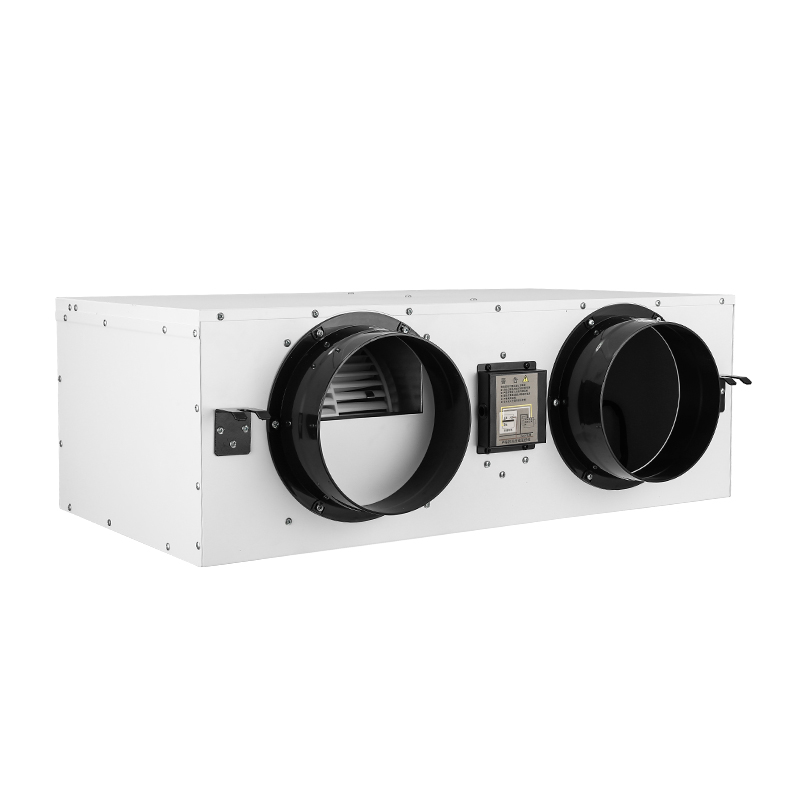
Recent industry search trends show rising demand for low-energy cooling solutions, EC motor-based ventilation systems, and high-reliability airflow units for enclosed industrial environments.
Modern industrial equipment is becoming smaller, more powerful, and more densely integrated, which significantly increases internal heat concentration.
Key drivers include:
Compact cooling design ensures stable performance in limited spaces.
Precise airflow control is now essential to maintain consistent internal temperatures and prevent localized overheating in sensitive components.
Key improvements include:
Better airflow precision enhances system stability.
EC motor technology is widely adopted due to its combination of energy efficiency, controllability, and long operational lifespan.
Key advantages include:
This makes EC fans ideal for industrial cooling applications.
As equipment is increasingly deployed in office-adjacent or human-centric environments, noise control has become an important design factor.
Manufacturers are focusing on:
Reduced noise improves usability across multiple environments.
Heat-related failures remain one of the most common causes of industrial equipment downtime, making thermal reliability a top engineering priority.
Key considerations include:
Reliable cooling directly extends equipment lifespan.
As a manufacturer of industrial ventilation solutions, we see a growing shift toward integrated thermal management systems rather than standalone cooling components. Buyers now prioritize efficiency, adaptability, and long-term operational value.
Common OEM expectations include:
This reflects the increasing sophistication of global industrial cooling procurement.
As industrial systems continue to evolve toward higher power density and smarter control architectures, thermal management is becoming a core design requirement rather than an auxiliary function. Efficiency, precision, and reliability now define modern cooling system selection.
In this evolving environment, sourcing from a reliable EC Fan supplier helps ensure stable airflow performance, reduced energy consumption, and long-term thermal reliability in modern industrial equipment applications.


 Add: Plot 23, Huanglang Industrial Zone, Jinqing Town, Luqiao District, Taizhou City, Zhejiang Province
 Email: 39489814@qq.com
 Phone: +86-13586083215
Guided by our vision to "become the benchmark industrial fan creator and manufacturer," we have consistently innovated and advanced to establish our current industry leadership position.
Copyright © Taizhou Jiucang Electromechanical Co., Ltd.
All Rights Reserved.

China Large Silent Fans
