
 English
 English
 عربى
 한국어

Industrial Wall Mounted Oscillating Fan
The Industrial Wall Mounted Oscillating Fan is a versatile and efficient cooling...
 Add: Plot 23, Huanglang Industrial Zone, Jinqing Town, Luqiao District, Taizhou City, Zhejiang Province
 TEL: +86-13586083215
For warehouse operators and manufacturing facilities, indoor climate management is not just a summer concern. During colder months, heating systems may warm the upper part of a building while employees working at floor level continue to feel cold. In summer, the same facility may struggle with stagnant air and uncomfortable working conditions. This seasonal challenge is encouraging buyers to look beyond conventional cooling equipment. When choosing an Industrial Ceiling Fans Factory, procurement teams should consider whether the fan system can support year-round air circulation, complement existing HVAC equipment, and adapt to changing operating conditions. Understanding seasonal airflow requirements can help businesses make more practical equipment decisions.
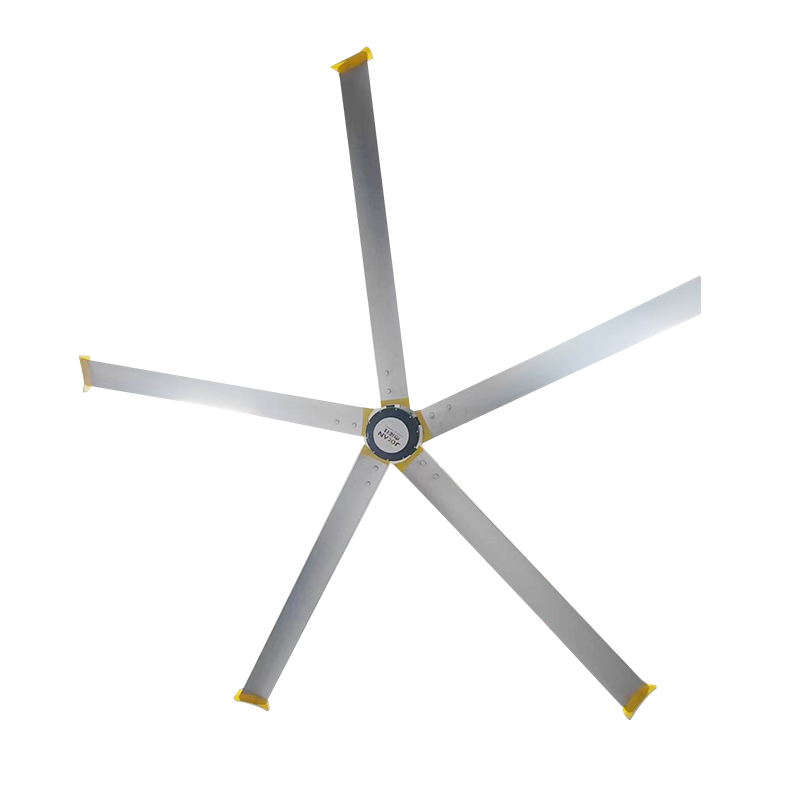
Warm air naturally rises, creating temperature differences between the upper and lower sections of buildings with high ceilings. This phenomenon, known as thermal stratification, is common in warehouses, factories, and distribution centers.
During winter, heated air can remain near the roof while workers occupy the cooler space below. As a result, heating equipment may need to operate longer to maintain comfortable conditions at floor level.
Industrial ceiling fans can help address this issue by moving accumulated warm air downward and promoting more even temperature distribution. However, the correct fan arrangement depends on building height, heating equipment, and the facility's airflow characteristics.
The airflow requirements of an industrial building change with the seasons. During warmer months, fans are generally used to create air movement around occupied areas, helping people feel cooler through increased evaporation from the skin.
In colder weather, the objective may shift toward reducing temperature differences between ceiling and floor levels. Some HVLS fan systems support this through suitable low-speed operation and seasonal control settings.
Buyers should confirm whether a selected model supports the required operating modes and whether its controls allow convenient adjustment.
Replacing an entire heating system is not always necessary when a facility experiences uneven temperatures. In some buildings, improving air distribution may help existing heating equipment serve occupied areas more effectively.
For example, a warehouse with ceiling-mounted heaters may benefit from carefully planned air circulation that moves warm air away from the roof area. This does not mean a ceiling fan generates heat or independently reduces the building's heating demand. Its contribution depends on the building envelope, heating arrangement, operating schedule, and fan configuration.
A facility assessment is therefore more useful than assuming every building will achieve the same result.
Choosing an industrial fan based only on floor area can lead to an unsuitable configuration. Engineers should also examine the building's internal layout and operating environment.
Important factors include:
These details help determine where air circulation is needed and whether multiple fans or different airflow solutions should be considered.
Warehouse activity is rarely constant throughout the day. Loading areas may become busy during delivery periods, while production zones can have different occupancy levels and heat conditions.
Variable-speed control gives operators more flexibility to adjust airflow according to actual requirements. Instead of running every fan at one fixed setting, facility teams can select suitable operating speeds for different conditions.
When comparing suppliers, buyers should ask about speed adjustment, control interfaces, electrical compatibility, and operating instructions. Simple and understandable controls can also make daily equipment management easier.
This is an important distinction for industrial buyers. Ceiling fans circulate indoor air, but they do not automatically remove pollutants, introduce fresh outdoor air, or extract moisture and process emissions.
Facilities involving welding, chemical handling, vehicle exhaust, or dust-generating operations may require dedicated ventilation and extraction systems. Industrial ceiling fans should be selected as part of the overall air-management plan, not treated as a substitute for equipment designed to control indoor contaminants.
A useful supplier evaluation should include more than a product catalogue. Buyers need to understand motor specifications, blade configuration, mounting requirements, control options, maintenance access, and the conditions under which the fan is expected to operate.
As a manufacturer, Taizhou Jiucang Electromechanical Co., Ltd. recognizes that different industrial buildings require different air circulation considerations. Buyers comparing an Industrial Ceiling Fans Factory should provide basic project information and discuss seasonal operating needs before confirming a model. This creates a clearer basis for product selection, installation planning, and long-term equipment management.


 Add: Plot 23, Huanglang Industrial Zone, Jinqing Town, Luqiao District, Taizhou City, Zhejiang Province
 Email: 39489814@qq.com
 Phone: +86-13586083215
Guided by our vision to "become the benchmark industrial fan creator and manufacturer," we have consistently innovated and advanced to establish our current industry leadership position.
Copyright © Taizhou Jiucang Electromechanical Co., Ltd.
All Rights Reserved.

China Large Silent Fans
