
 English
 English
 عربى
عربى 한국어
한국어
Industrial Wall Mounted Oscillating Fan
The Industrial Wall Mounted Oscillating Fan is a versatile and efficient cooling...
 Add: Plot 23, Huanglang Industrial Zone, Jinqing Town, Luqiao District, Taizhou City, Zhejiang Province
 TEL: +86-13586083215
Demand for indoor air circulation systems continues to shift, and the Air Purifier Fan Factory and Ceiling Fan Factory play a central role in supplying equipment that supports both airflow management and indoor environmental balance in residential, commercial, and public buildings. Ceiling Fan Factory: Energy Efficient Cooling Design For Modern Buildings reflects how ceiling fan systems are being adapted alongside air purification functions to meet changing building ventilation requirements.
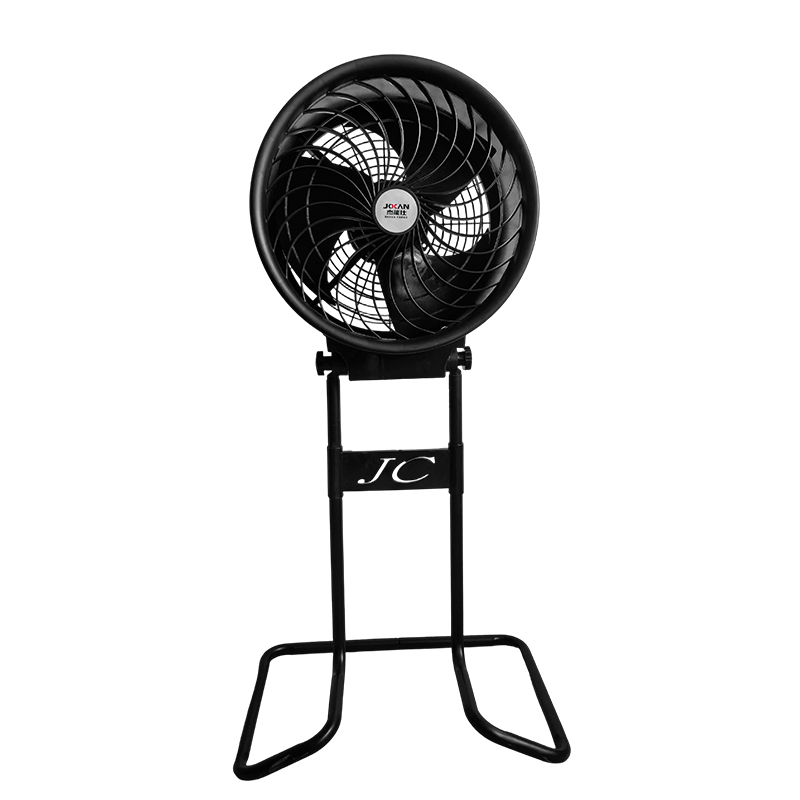
Building designs today often prioritize enclosed spaces with controlled ventilation systems, which places more attention on how air moves across rooms rather than relying solely on external airflow. Traditional cooling systems alone may not always address uneven air distribution, especially in larger indoor areas such as offices, retail spaces, classrooms, and residential apartments.
Ceiling fan systems are increasingly integrated into broader airflow strategies, where steady air movement supports thermal comfort distribution without depending entirely on mechanical cooling cycles. At the same time, air purification-related fan systems are being introduced in environments where air quality management is a concern, combining circulation with filtration-oriented design considerations.
This shift is not driven by a single factor but by multiple operational needs:
As a result, both ceiling fan production and air purification fan development are aligning more closely with architectural planning rather than being treated as standalone appliances.
Recent adjustments in fan system engineering focus on airflow stability, structural balance, and compatibility with different ceiling heights and room layouts. Ceiling fan systems are no longer limited to basic rotation-based cooling; instead, blade design, motor control, and mounting flexibility are being refined to suit varied installation conditions.
Modern ceiling fan configurations typically emphasize:
Air purifier fan systems developed within similar manufacturing environments also reflect overlapping design logic, especially in airflow direction control and internal air channel structuring. While ceiling fans focus on air circulation, purifier fan units incorporate filtration layers that require controlled airflow paths to maintain consistent air movement through filters.
The following table outlines a simplified comparison of design focus areas:
|
Feature Area |
Ceiling Fan Systems |
Air Purifier Fan Systems |
|
Primary Function |
Air circulation |
Air circulation + filtration flow |
|
Air Movement Style |
Broad room distribution |
Directed internal airflow |
|
Installation Position |
Ceiling-mounted |
Floor or tabletop units |
|
System Integration |
HVAC and room ventilation |
Air quality management systems |
|
Control Methods |
Wall switch / remote control |
Digital control / sensors |
These structural differences show how each product category addresses distinct but sometimes overlapping indoor environmental needs.
Ceiling fan systems are commonly installed in environments where steady air movement is needed across larger or shared spaces. In residential settings, they are often placed in living rooms, bedrooms, and open-plan kitchens where air circulation supports temperature balance. In commercial spaces, such as cafés, coworking areas, and retail environments, ceiling fans contribute to consistent airflow without taking up floor space.
Air purifier fan systems, while serving a different function, are frequently used in environments that require controlled air quality management. These include healthcare waiting areas, educational facilities, and indoor recreational spaces where airflow and air filtration both play roles in maintaining indoor conditions.
Some typical use scenarios include:
In many of these environments, ceiling fans and air purifier fans are used in parallel rather than separately, forming part of a broader indoor airflow strategy.
Field observations from building maintenance teams and installation records show that ceiling fan systems often influence perceived indoor comfort levels by redistributing air that accumulates near ceilings or corners. This can reduce uneven temperature zones without requiring constant adjustment of central cooling systems.
A simplified operational summary from multiple installation environments can be presented as:
Air purifier fan systems, when installed alongside ceiling fans, tend to support air movement through filtration units more consistently when room airflow is already stabilized. This pairing is often considered during early-stage building design rather than added afterward.


 Add: Plot 23, Huanglang Industrial Zone, Jinqing Town, Luqiao District, Taizhou City, Zhejiang Province
 Email: 39489814@qq.com
 Phone: +86-13586083215
Guided by our vision to "become the benchmark industrial fan creator and manufacturer," we have consistently innovated and advanced to establish our current industry leadership position.
Copyright © Taizhou Jiucang Electromechanical Co., Ltd.
All Rights Reserved.

China Large Silent Fans
