
 English
 English
 عربى
عربى 한국어
한국어
Industrial Wall Mounted Oscillating Fan
The Industrial Wall Mounted Oscillating Fan is a versatile and efficient cooling...
 Add: Plot 23, Huanglang Industrial Zone, Jinqing Town, Luqiao District, Taizhou City, Zhejiang Province
 TEL: +86-13586083215
Air Purifier Fan Factory and Ceiling Fan Factory are increasingly connected with how modern indoor environments are designed, especially as households and small commercial spaces look for more controlled airflow and cleaner indoor air. Instead of treating ventilation and air cleaning as separate systems, many solutions now bring both functions together in a single structure that supports continuous air circulation while managing indoor particles and odors in a more structured way.
In practical use, this type of equipment is not limited to seasonal needs. It responds to daily living conditions such as cooking fumes, dust accumulation, humidity changes, and limited natural ventilation in sealed buildings. As residential spaces become more compact and energy-conscious, airflow management equipment is being evaluated not only by air movement capacity but also by how consistently it supports indoor air renewal.
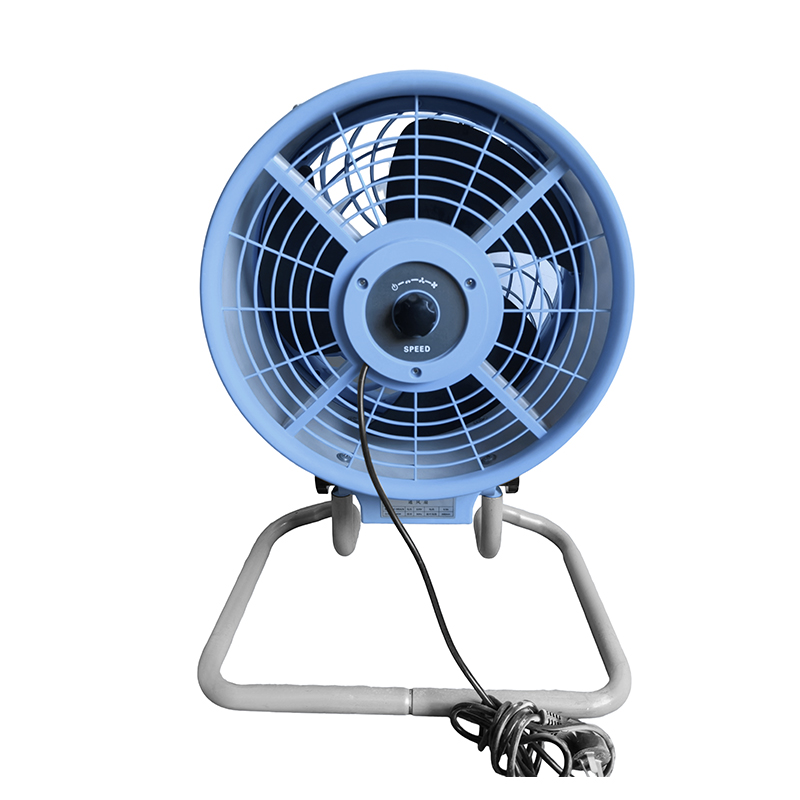
Modern buildings often prioritize insulation and energy control, which can reduce natural air exchange. While this improves temperature stability, it can also create situations where indoor air becomes stagnant over time. Common issues include lingering odors in kitchens, dust buildup in living rooms, and uneven air distribution in bedrooms or shared spaces.
Ceiling-mounted circulation systems and integrated air purification units are often introduced to address these conditions. However, challenges remain when airflow is not evenly distributed or when filtration systems are used without sufficient air movement support. In such cases, air can pass through a filter but still remain unevenly circulated across the room.
Key concerns often include:
These factors have contributed to a shift toward combined airflow systems that can operate continuously without requiring frequent manual adjustment.
Recent development trends in Ceiling Fan Factory production have focused on combining traditional air circulation with filtration components. Instead of relying solely on external air purifiers or standalone fans, integrated systems aim to manage both airflow direction and air quality within the same structure.
These systems often include modular designs that allow air intake, filtration passage, and redistribution through controlled fan movement. The goal is not to replace ventilation entirely but to support a more stable indoor airflow cycle.
Typical structural and functional elements include:
Example Feature Overview
|
Component |
Function |
Practical Effect |
|
Intake Filter Layer |
Captures dust and particles |
Reduces visible airborne debris |
|
Circulation Fan Unit |
Moves air across the room |
Supports even air distribution |
|
Direction Control System |
Adjusts airflow angle |
Helps reach corners and enclosed areas |
|
Sensor Module (optional) |
Monitors indoor conditions |
Supports adaptive operation |
|
Housing Structure |
Protects internal components |
Maintains stable airflow channel |
This combined structure allows airflow systems to operate in a more continuous manner, reducing reliance on separate devices for air movement and air cleaning.
Airflow and purification fan systems are not limited to one type of environment. Their use has expanded across different indoor spaces where air circulation consistency is important but full-scale HVAC systems are not practical or necessary.
In residential environments, they are often installed in living rooms and bedrooms where air tends to become stagnant. Kitchens benefit from improved odor dispersion, especially in homes with limited exhaust systems. In home offices, steady airflow can support a more comfortable working environment without strong drafts.
Other common application scenarios include:
The flexibility of ceiling-mounted or wall-integrated installation also allows these systems to be adapted into both new construction and renovation projects without major structural changes.
Testing in controlled indoor environments has shown that combining air circulation with filtration can change how particles are distributed over time. While results vary depending on room size, layout, and operating mode, some general patterns have been observed in airflow studies.
For example, in a medium-sized enclosed room:
These observations are typically measured under standard operating conditions rather than extreme or optimized settings. The goal is to understand how airflow behaves in everyday usage rather than under controlled laboratory assumptions.
The development of combined airflow and purification systems reflects a shift in how indoor environments are managed. Instead of separating ventilation, cooling, and air cleaning into different devices, there is a gradual move toward systems that coordinate these functions within a single airflow cycle.
This approach is particularly relevant for urban housing, where space efficiency and energy awareness are increasingly important. By integrating airflow direction control with air quality management, these systems support more consistent indoor conditions without requiring complex infrastructure changes.
At the same time, Ceiling Fan Factory design improvements continue to focus on mechanical stability, quieter operation, and adaptability to different room layouts. These factors contribute to broader adoption in both residential and light commercial settings.


 Add: Plot 23, Huanglang Industrial Zone, Jinqing Town, Luqiao District, Taizhou City, Zhejiang Province
 Email: 39489814@qq.com
 Phone: +86-13586083215
Guided by our vision to "become the benchmark industrial fan creator and manufacturer," we have consistently innovated and advanced to establish our current industry leadership position.
Copyright © Taizhou Jiucang Electromechanical Co., Ltd.
All Rights Reserved.

China Large Silent Fans
