
 English
 English
 عربى
عربى 한국어
한국어
Industrial Wall Mounted Oscillating Fan
The Industrial Wall Mounted Oscillating Fan is a versatile and efficient cooling...
 Add: Plot 23, Huanglang Industrial Zone, Jinqing Town, Luqiao District, Taizhou City, Zhejiang Province
 TEL: +86-13586083215
Creating a stable and healthy indoor environment often depends on how effectively a building handles airflow, temperature changes, and the movement of contaminants. Devices such as Air Curtain Machines and a Fresh Air Fan play an important role in these situations, helping facilities maintain steady conditions even when doors open frequently or when indoor areas require fresh air circulation. As workplaces look for practical ways to support comfort and air exchange, understanding how these systems operate can help users select suitable solutions for different settings.
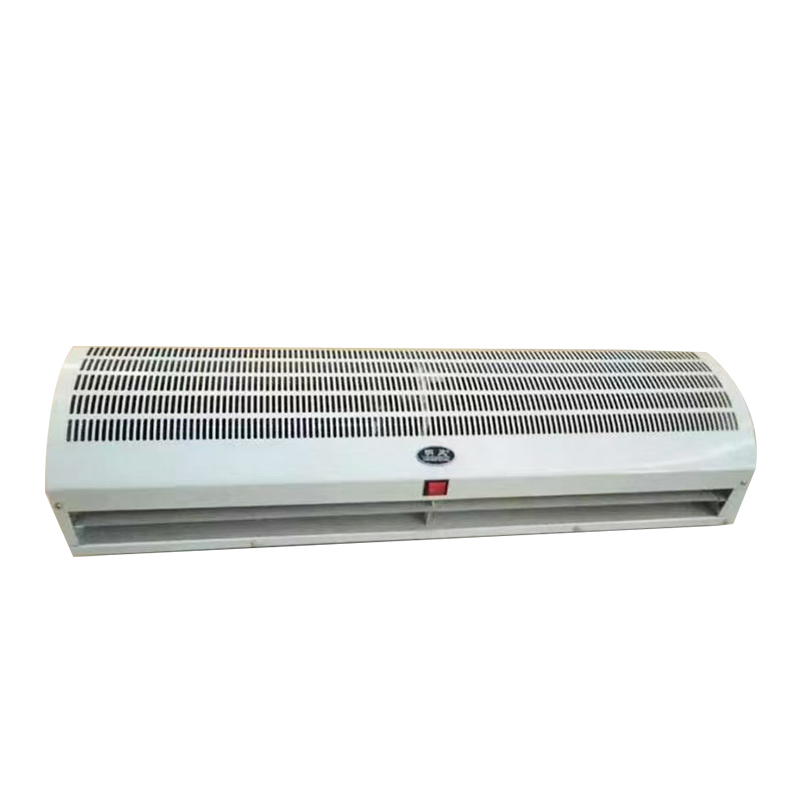
Air curtain machines are designed to form a continuous stream of air across an open doorway. This airflow acts as a controlled barrier that separates indoor and outdoor environments without the need for physical doors to remain closed at all times. Many workplaces face challenges when employees and goods move through entrances throughout the day, causing conditioned air to escape and unfiltered outdoor air to enter. An air curtain helps steady these fluctuations so people inside the facility experience fewer drafts or sudden temperature changes.
In facilities such as retail stores, warehouses, food processing plants, and healthcare buildings, the machine helps reduce the amount of dust, insects, and small airborne particles carried in from outside. This is particularly useful at loading docks and main entrances where traffic flow is continuous. When positioned and set correctly, the airflow direction and intensity help prevent air from freely mixing across the doorway. Users often find that this contributes to a more manageable indoor environment, especially during peak operation hours.
Temperature imbalance is one of the frequent issues encountered in buildings with high foot traffic or large open entrances. Cold drafts entering during winter or warm airflow seeping in during summer can affect employee comfort and may place additional strain on heating or cooling systems. Air curtain machines help create a more consistent temperature zone by slowing down the exchange of indoor and outdoor air each time a door opens.
In offices, hospitality spaces, and customer service areas, maintaining a steady indoor temperature allows staff and visitors to feel more comfortable, lowering distractions and discomfort caused by sudden shifts in airflow. While an air curtain does not replace an HVAC system, it acts as a supporting component that assists the main equipment in holding indoor conditions more stable.
A Fresh Air Fan is designed to introduce outside air into a building and move indoor air outward at a controlled rate. Many workplaces depend on this function to help dilute odors, stale air, and indoor pollutants. In areas where ventilation is limited—such as small rooms, crowded offices, or production spaces—the fresh air fan provides continuous air movement that supports healthier air quality.
Proper ventilation is important not only for comfort but also for environments that require cleaner airflow, such as laboratories, storage areas with chemical materials, or food handling rooms. Fresh air fans help supply a steady flow of outdoor air, allowing indoor air to circulate more freely and preventing it from becoming stagnant. When combined with air curtains installed at entry points, the system helps maintain both circulation and separation, allowing air to move where it is needed without creating unwanted drafts across doorways.
To keep these devices working over time, regular maintenance plays a significant role. Air curtain machines require periodic checks of the motor, fan blades, filters (if equipped), and the air outlet. Dust buildup can influence airflow strength and may cause the unit to sound louder than expected. Cleaning the air intake and confirming that the mounting position has not shifted can help restore steady performance.
Fresh air fans also need their filters cleaned or replaced as dust collects over months of operation. The fan motor, bearings, and wiring should be checked to ensure the airflow remains consistent. In many workplaces, small performance issues go unnoticed until airflow begins to drop or noise increases, so scheduled inspections can help users avoid unexpected interruptions.
Choosing suitable models depends on factors such as door size, indoor air volume, and required airflow direction. For air curtain machines, door height and width strongly influence the airflow pressure needed to form a stable air stream. Facilities with higher ceilings or large loading doors may need stronger units than small retail shop entrances.
For fresh air fans, airflow capacity, installation position, and noise preference all influence the final selection. Some workplaces prefer ceiling-mounted or wall-mounted units, while others may require duct-connected designs for more targeted air movement. Users often find that reviewing their layout and daily traffic patterns helps determine the configuration that suits their environment.


 Add: Plot 23, Huanglang Industrial Zone, Jinqing Town, Luqiao District, Taizhou City, Zhejiang Province
 Email: 39489814@qq.com
 Phone: +86-13586083215
Guided by our vision to "become the benchmark industrial fan creator and manufacturer," we have consistently innovated and advanced to establish our current industry leadership position.
Copyright © Taizhou Jiucang Electromechanical Co., Ltd.
All Rights Reserved.

China Large Silent Fans
