
 English
 English
 عربى
عربى 한국어
한국어
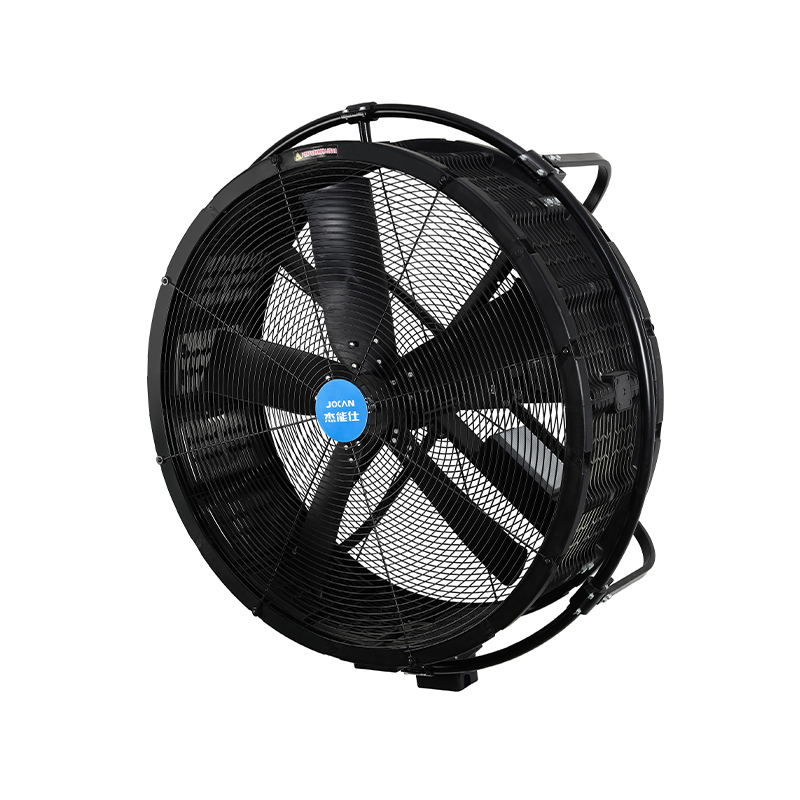
Industrial Wall Mounted Oscillating Fan
The Industrial Wall Mounted Oscillating Fan is a versatile and efficient cooling...
 Add: Plot 23, Huanglang Industrial Zone, Jinqing Town, Luqiao District, Taizhou City, Zhejiang Province
 TEL: +86-13586083215
Many building managers look for ways to improve indoor airflow without rebuilding their entire climate-control setup. Devices such as Air Curtain Machines and a Fresh Air Fan are often introduced as additions to existing HVAC systems, especially when facilities experience frequent doorway activity, temperature loss at entrances, or uneven ventilation. Understanding how these devices interact with HVAC units helps users choose practical configurations that support daily operations.
HVAC systems work to maintain indoor temperatures, but each time a door opens, conditioned air escapes and outdoor air enters. Air curtain machines help manage this exchange by projecting a continuous stream of air across entry points. This stream creates resistance against outdoor air, slowing direct temperature migration.
In buildings where entrance doors open repeatedly—such as loading docks, retail spaces, or service counters—the HVAC system often struggles to keep the indoor environment steady. The system may switch on more frequently, not because the equipment is inadequate, but because temperature loss happens faster than it can compensate. By controlling air movement at the doorway, the air curtain reduces the amount of warm or cool air that escapes, giving HVAC units a steadier workload. This helps create more consistent conditions near entrances and reduces sudden discomfort for workers stationed in those areas.
Ventilation patterns can become uneven when separate rooms, corridors, or work areas share a single HVAC system. Stagnant corners, pressure imbalances, or insufficient air exchange often appear during peak seasons when doors remain closed for long periods. A fresh air fan helps bring in outdoor air in a controlled manner, distributing it through ducts or designated openings.
When integrated with an HVAC system, the fresh air fan supports the supply of outdoor air without pushing the HVAC unit beyond its capacity. It can be operated on scheduled intervals or adjusted according to occupancy levels. This is useful in meeting rooms, workshops, kitchens, or storage spaces where air needs to be replaced more frequently. By improving airflow circulation, the HVAC system does not need to work as hard to correct humidity or temperature irregularities caused by stagnant air.
Pressure imbalances are a frequent but often overlooked issue. When indoor pressure becomes too high, doors may be harder to close and conditioned air is pushed outward. When pressure is too low, outdoor drafts enter quickly, reducing comfort and prompting HVAC systems to react more aggressively.
Air curtain machines, when placed at main doorways, help slow unintentionally fast movement of air caused by pressure differences. . Meanwhile, fresh air fans can be used to adjust intake levels, helping building operators regulate the balance between indoor and outdoor air. When these factors are managed carefully, HVAC equipment tends to operate with fewer sudden corrections.
Cold months bring greater heat loss, while warm months bring increased cooling demand. Air curtain machines offer steady support by reducing direct exposure at entrances, helping indoor air remain more stable regardless of outdoor temperature.
During winter, incoming drafts can significantly lower temperatures near entrance zones. Staff near doors often feel the impact immediately, and the HVAC system must work harder to restore balance. During summer, warm outdoor air enters quickly, especially if the building has a large or frequently used doorway. Air curtain machines provide a consistent airflow pattern that helps slow these fluctuations.
Fresh air fans contribute differently depending on the season. During colder months, controlled amounts of outdoor air help avoid excessive dryness and maintain healthier ventilation patterns. In warmer months, steady air exchange helps reduce humidity buildup and supports the HVAC system’s cooling process. When both devices are adjusted according to seasonal conditions, they complement the HVAC system’s performance throughout the year.
Good compatibility between these devices and existing HVAC units starts with correct installation. Air curtain machines need to match the width and height of the doorway to create the intended airflow barrier. If the coverage is insufficient, the device may not function as expected, leaving the HVAC system to compensate for temperature loss.
Mounting height, airflow angle, and power settings also affect performance. A carefully aligned air curtain allows the HVAC system to operate more predictably because door-related temperature changes become less disruptive.
Fresh air fans depend heavily on proper duct routing and filtration placement. If ducts are obstructed or filters are not cleaned regularly, the fan must work harder than necessary, which can affect airflow patterns connected to the HVAC system. Ensuring that the fan’s capacity aligns with building size also helps avoid pressure issues.


 Add: Plot 23, Huanglang Industrial Zone, Jinqing Town, Luqiao District, Taizhou City, Zhejiang Province
 Email: 39489814@qq.com
 Phone: +86-13586083215
Guided by our vision to "become the benchmark industrial fan creator and manufacturer," we have consistently innovated and advanced to establish our current industry leadership position.
Copyright © Taizhou Jiucang Electromechanical Co., Ltd.
All Rights Reserved.

China Large Silent Fans
