
 English
 English
 عربى
 한국어

Industrial Wall Mounted Oscillating Fan
The Industrial Wall Mounted Oscillating Fan is a versatile and efficient cooling...
 Add: Plot 23, Huanglang Industrial Zone, Jinqing Town, Luqiao District, Taizhou City, Zhejiang Province
 TEL: +86-13586083215
Custom ventilation equipment often starts with a simple requirement: the standard product does not quite fit the project. The challenge is turning that requirement into specifications that a manufacturer can actually produce and verify. For overseas engineering teams and procurement buyers, a Fresh Air Fan may need adjustments to its dimensions, electrical configuration, connection arrangement, control method, or installation structure. The clearer these requirements are before production, the easier it becomes to develop a suitable product without unnecessary revisions.
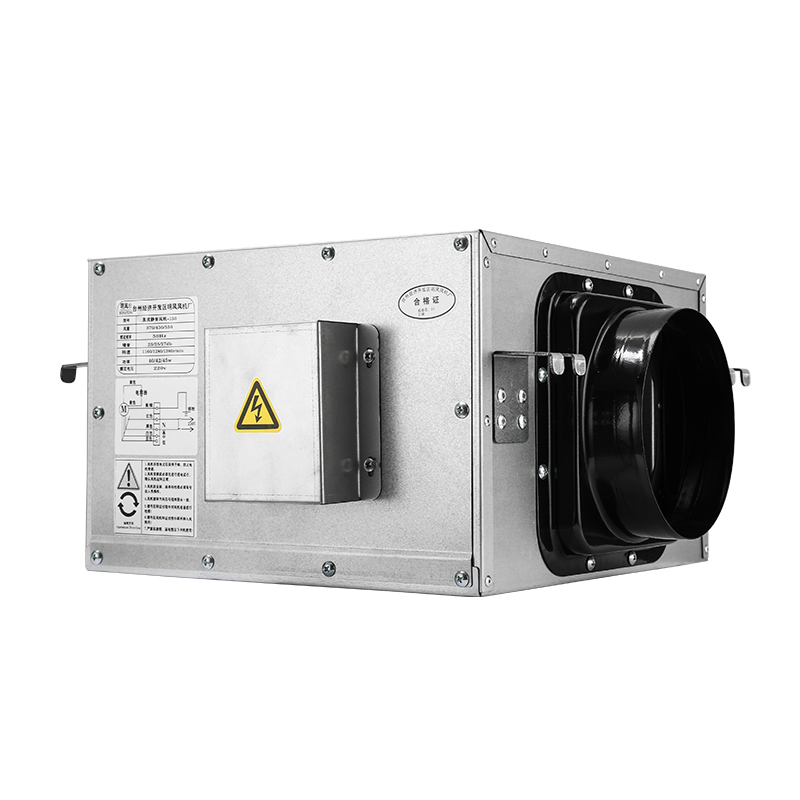
Customization should start with the space where the fan will be installed. Buyers should provide the available installation dimensions and explain how the equipment will connect with the surrounding ventilation system.
A drawing is particularly useful when the available space is limited. It allows the manufacturer to understand the relationship between the fan body, mounting position, air connection, and nearby components.
Rather than asking for a fan that is simply “smaller” or “more compact,” buyers can provide the actual dimensional restrictions. This gives the manufacturer a practical basis for product development.
Electrical requirements should be confirmed before the product enters production. Different projects may require different voltage, phase, wiring, motor configurations, or control arrangements.
Buyers should provide the electrical conditions available at the installation site and identify any specific connection requirements. If the equipment will be integrated into an existing control system, that information should also be communicated during the development stage.
Clear electrical specifications can prevent a situation where a mechanically suitable fan still requires changes before installation.
The way a fan is controlled can influence its configuration. A simple on-and-off operation is different from a project that requires adjustable operation or integration with other equipment.
The buyer should explain how the fan is expected to start, stop, and operate. If external control is required, the manufacturer needs to understand the relevant interface and connection requirements before finalizing the design.
This is particularly important for customized orders because control requirements may not be visible from the outside of the finished fan.
The fan housing is not only an enclosure. Its dimensions, connection points, mounting structure, access areas, and overall configuration all need to work with the installation.
During customization, buyers can confirm:
Providing these details in advance allows the manufacturer to evaluate the complete structure rather than modifying individual parts without considering the whole assembly.
Written descriptions are useful, but technical drawings can make customization considerably clearer. Even a simple marked drawing can show which dimensions are fixed and which can be adjusted.
Buyers should identify critical dimensions rather than providing a drawing without explanation. If several dimensions are flexible, marking them clearly gives the manufacturer more room to develop a practical configuration.
For manufacturers, this information also makes internal communication easier between design, production, assembly, and inspection teams.
A customized product should have a clear approval stage before larger production begins. The sample allows the buyer to check whether the physical product matches the agreed requirements.
The review can cover:
Any required adjustment should be recorded before the final production specification is released.
Custom ventilation projects may become repeat purchases when the same equipment is required for additional buildings, production areas, or replacement projects. The final approved specification should therefore be retained after the first order.
A complete record can connect the product model with its drawings, electrical requirements, dimensions, and other agreed details. This gives the manufacturer a reliable reference when the buyer returns with another order.
It also reduces the need to recreate the product from informal descriptions.
For overseas buyers, customization works best when technical requirements are discussed directly with the production team. A Fresh Air Fan Factory can evaluate whether requested dimensions, electrical configurations, housing changes, and control requirements can be incorporated into a practical manufacturing process.
The goal of customization is not to add unnecessary complexity, but to make the fan fit the actual project more precisely. When buyers provide clear installation information, electrical requirements, drawings, and approval references, the Fresh Air Fan Factory can turn those requirements into a more controlled production specification and provide a clearer path from initial concept to finished ventilation equipment.


 Add: Plot 23, Huanglang Industrial Zone, Jinqing Town, Luqiao District, Taizhou City, Zhejiang Province
 Email: 39489814@qq.com
 Phone: +86-13586083215
Guided by our vision to "become the benchmark industrial fan creator and manufacturer," we have consistently innovated and advanced to establish our current industry leadership position.
Copyright © Taizhou Jiucang Electromechanical Co., Ltd.
All Rights Reserved.

China Large Silent Fans
