
 English
 English
 عربى
عربى 한국어
한국어
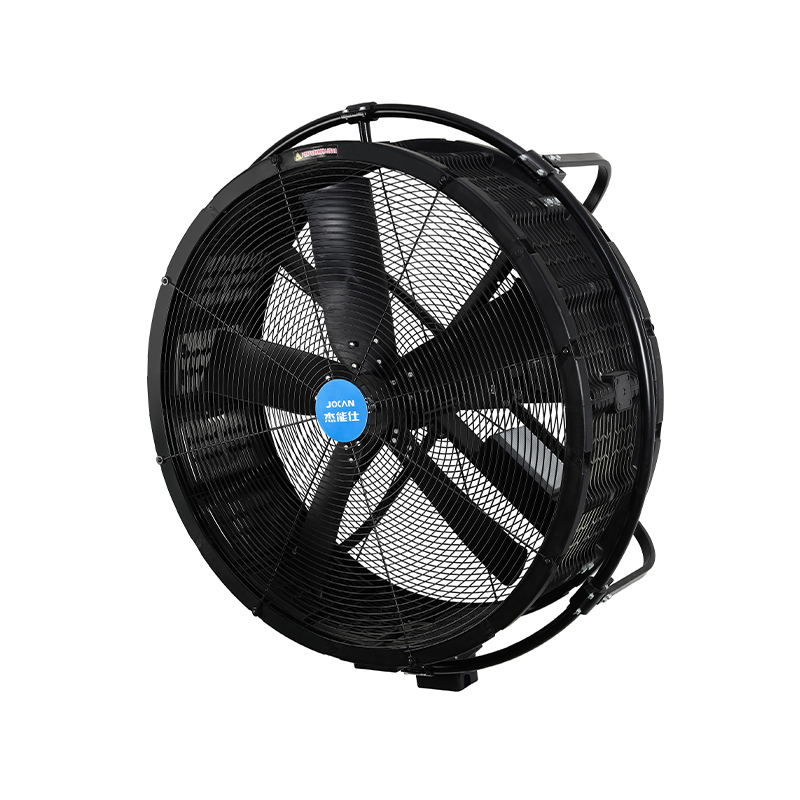
Industrial Wall Mounted Oscillating Fan
The Industrial Wall Mounted Oscillating Fan is a versatile and efficient cooling...
 Add: Plot 23, Huanglang Industrial Zone, Jinqing Town, Luqiao District, Taizhou City, Zhejiang Province
 TEL: +86-13586083215
Air Purifier Fan Factory and Ceiling Fan Factory production lines are increasingly aligned with changing indoor ventilation expectations in residential and commercial environments. As indoor spaces become more sealed for energy control, airflow distribution and particulate movement management require more structured fan system design rather than relying only on natural air exchange. This shift has led manufacturers to integrate airflow balancing principles with filtration-compatible fan structures, where air movement is designed to remain steady while supporting particle reduction systems and thermal circulation needs.

Modern buildings are often constructed with tighter insulation, which reduces uncontrolled air leakage but also limits natural ventilation cycles. In such environments, air can become unevenly distributed, creating zones with stagnant airflow, temperature variation, or accumulated indoor particulates. Standard ceiling circulation alone may not fully address these inconsistencies, especially in larger rooms, office floors, or shared indoor spaces.
At the same time, users are more aware of indoor air conditions due to longer occupancy times in closed environments. Kitchens, workspaces, and residential living areas often contain mixed airflow challenges such as humidity retention, cooking particles, or localized heat pockets. Ceiling-based circulation systems can help move air across a wider radius, but without structured airflow guidance or integration with purification modules, the movement may remain uneven across different zones in the same room.
This is where combined airflow design approaches from Air Purifier Fan Factory and Ceiling Fan Factory development become relevant, as both focus on improving how air is distributed rather than only increasing air movement speed.
Fan system development has gradually moved toward combining circulation efficiency with controlled airflow direction. In production environments, design adjustments are typically focused on blade geometry, motor stability, and airflow channel alignment. These elements are configured to reduce irregular turbulence and support more uniform air distribution.
Air purifier-integrated fan structures often introduce layered airflow paths. These paths allow air intake and discharge to follow a more predictable movement cycle, which can assist in maintaining steadier indoor circulation. Ceiling fan structures, on the other hand, focus on broad coverage through wider blade span and adjustable speed levels, allowing airflow to be adapted based on room size or occupancy changes.
Common adjustments include:
These design elements are not intended to transform air quality directly but to create a more stable airflow environment that supports other indoor air management systems.
Combined airflow and ceiling circulation systems are used across a variety of indoor environments where air consistency is required over extended periods. In residential settings, living rooms and bedrooms benefit from steady air movement that prevents localized heat accumulation, especially in warm climates or sealed housing structures.
In office environments, ceiling fan systems are often used alongside HVAC systems to distribute conditioned air more evenly across work zones. This reduces temperature variation between corners of the same floor area. Air purifier fan systems are more frequently placed in shared rooms or enclosed offices where particle accumulation from occupancy and equipment use is higher.
Retail spaces and hospitality environments also utilize these systems to maintain air movement across open layouts. In such spaces, consistent airflow helps avoid stagnant zones near corners or low-traffic areas. Meanwhile, educational facilities apply similar systems to maintain air circulation across classrooms where occupancy levels change throughout the day.
In several indoor installation scenarios, airflow adjustment systems combining ceiling circulation and air purification integration have shown measurable differences in air distribution patterns. For example, in a medium-sized office environment with approximately 80–120 square meters of floor space, airflow mapping before and after installation indicated more even air movement across peripheral zones.
Temperature variation between center and edge zones, which previously showed differences of around 2–3°C in some cases, was reduced to a narrower range after airflow redistribution adjustments were introduced. Particle distribution measurements in enclosed meeting rooms also showed slower accumulation rates when purifier-integrated airflow systems were operating continuously during occupancy hours.
In residential environments, users often report more consistent air movement during nighttime operation when ceiling fans run at lower speed settings combined with air circulation units. This allows air to remain in motion without creating strong directional drafts, which can be disruptive in sleeping areas.
These observations are typically dependent on room layout, ceiling height, and airflow obstruction, meaning results vary across different installation conditions.
The development direction for Air Purifier Fan Factory and Ceiling Fan Factory systems reflects a broader shift in how indoor environments are managed. Rather than treating air movement and air treatment as separate systems, newer approaches focus on combining circulation patterns with filtration-ready airflow structures.
This does not replace ventilation systems but adds an additional layer of airflow control within indoor environments. It also supports energy-aware building strategies, where airflow distribution can reduce reliance on high-intensity localized cooling or heating adjustments.


 Add: Plot 23, Huanglang Industrial Zone, Jinqing Town, Luqiao District, Taizhou City, Zhejiang Province
 Email: 39489814@qq.com
 Phone: +86-13586083215
Guided by our vision to "become the benchmark industrial fan creator and manufacturer," we have consistently innovated and advanced to establish our current industry leadership position.
Copyright © Taizhou Jiucang Electromechanical Co., Ltd.
All Rights Reserved.

China Large Silent Fans
