
 English
 English
 عربى
عربى 한국어
한국어
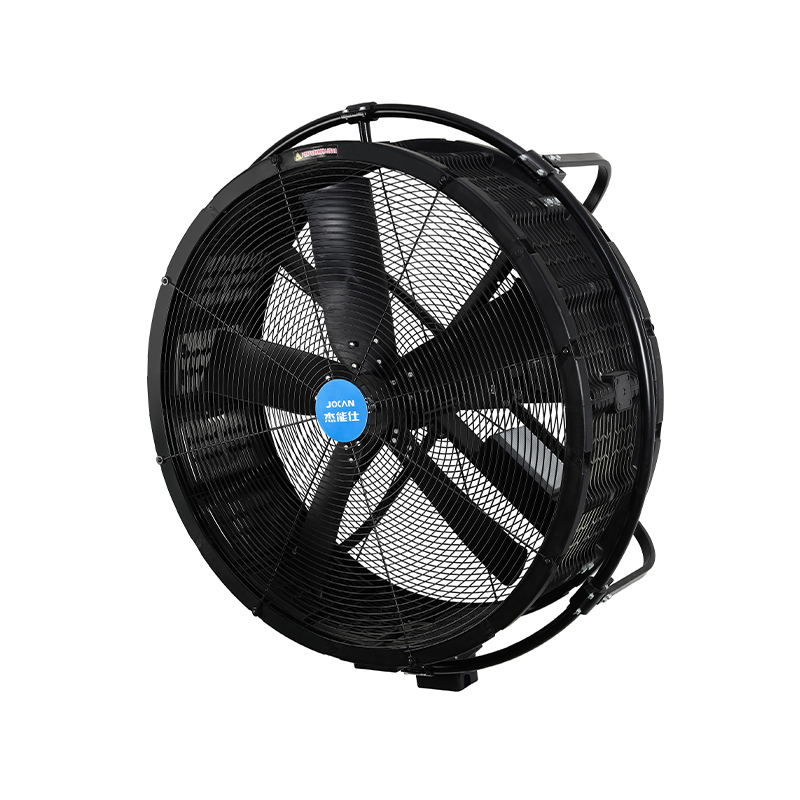
Industrial Wall Mounted Oscillating Fan
The Industrial Wall Mounted Oscillating Fan is a versatile and efficient cooling...
 Add: Plot 23, Huanglang Industrial Zone, Jinqing Town, Luqiao District, Taizhou City, Zhejiang Province
 TEL: +86-13586083215
Maintaining indoor air quality is an ongoing challenge in both residential and commercial settings. Devices like the EC Fan and Fresh Air Fan are designed to assist in controlling airflow, temperature, and humidity, helping create a more balanced indoor environment. While often considered as supplementary to HVAC systems, these fans play a key role in distributing fresh air efficiently and regulating the overall comfort of a space.

EC Fans, short for electronically commutated fans, combine the features of AC and DC motors. Their unique design allows for:
These features make EC Fans suitable for situations where continuous airflow adjustment is necessary, such as in areas prone to varying temperatures or moisture levels. Their ability to adjust to different airflow demands helps maintain a more even environment without excessive energy consumption.
Fresh Air Fans serve as a bridge between indoor and outdoor air, ensuring that the interior receives a steady supply of filtered outside air. This process not only helps in balancing temperature but also aids in maintaining appropriate humidity levels. Unlike standard fans, Fresh Air Fans are designed to avoid drafts while distributing air evenly across the space. This is particularly relevant in rooms with high occupancy or in buildings with limited natural ventilation.
Residential: Enhancing air circulation in kitchens, bathrooms, or basements where humidity can fluctuate
Offices: Supporting HVAC systems to maintain consistent temperature and reduce localized hot or cold spots
Healthcare and Laboratories: Ensuring controlled air exchange to maintain clean and comfortable conditions
|
Feature |
EC Fan |
Conventional Fan |
|
Energy Consumption |
Moderate, adjusts with need |
Constant, higher |
|
Noise Level |
Low, smooth operation |
Moderate to high |
|
Speed Control |
Adjustable electronically |
Manual or fixed |
|
Suitability for Humidity |
Sensitive to changes |
Less adaptive |
This comparison highlights that while conventional fans provide basic airflow, EC Fans offer a level of adaptability that can assist in maintaining more even temperature and humidity conditions.
Even with advanced fan technology, proper upkeep is essential:
Following these steps can prevent common issues such as uneven airflow, excess vibration, or increased energy use.
Q1: Can EC Fans replace a full HVAC system?
A1: EC Fans are designed to complement existing HVAC systems rather than replace them. They help regulate airflow and reduce localized temperature differences.
Q2: How do Fresh Air Fans affect indoor humidity?
A2: By introducing outside air and circulating it evenly, Fresh Air Fans can help maintain stable humidity levels, particularly in spaces prone to moisture accumulation.
Q3: Are EC Fans energy-efficient?
A3: EC Fans adjust their speed based on demand, allowing for moderate energy use compared to fans that run at a fixed rate.
Q4: What is the good placement for Fresh Air Fans?
A4: Place them where air can circulate freely without obstruction, avoiding direct drafts from doors or windows for balanced airflow.
Q5: How often should maintenance be performed?
A5: Regular visual inspections can be done monthly, with detailed cleaning and filter checks every three to six months depending on usage.
Q6: Can these fans be used in commercial kitchens?
A6: Yes, especially where humidity and temperature fluctuate significantly. They can work alongside exhaust systems to maintain comfort and safety.


 Add: Plot 23, Huanglang Industrial Zone, Jinqing Town, Luqiao District, Taizhou City, Zhejiang Province
 Email: 39489814@qq.com
 Phone: +86-13586083215
Guided by our vision to "become the benchmark industrial fan creator and manufacturer," we have consistently innovated and advanced to establish our current industry leadership position.
Copyright © Taizhou Jiucang Electromechanical Co., Ltd.
All Rights Reserved.

China Large Silent Fans
