
 English
 English
 عربى
عربى 한국어
한국어
Industrial Wall Mounted Oscillating Fan
The Industrial Wall Mounted Oscillating Fan is a versatile and efficient cooling...
 Add: Plot 23, Huanglang Industrial Zone, Jinqing Town, Luqiao District, Taizhou City, Zhejiang Province
 TEL: +86-13586083215
Air Purifier Fan Factory and Ceiling Fan Factory development has gradually become part of how modern smart buildings organize indoor airflow and ventilation coordination. As building management systems shift toward sensor-based control and zoned environmental adjustment, ceiling fan structures are increasingly integrated into broader ventilation logic rather than functioning as standalone air circulation devices. This change is shaping how indoor air is distributed across different spaces, especially in buildings where occupancy levels and environmental conditions change throughout the day.
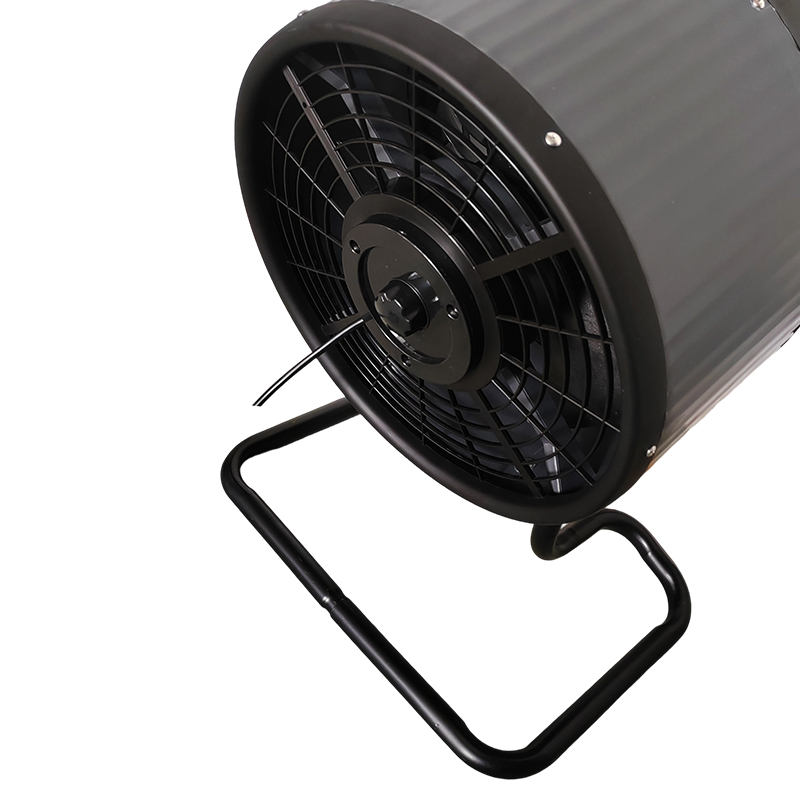
Smart buildings rely on interconnected systems that manage lighting, temperature, occupancy, and airflow through centralized or semi-automated controls. Ventilation, in particular, has become more complex because modern structures are more sealed, reducing passive air exchange. This creates a need for controlled airflow distribution that responds to occupancy density, heat variation, and indoor air quality readings.
Traditional ventilation systems often focus on air exchange rates through HVAC ducts, but they may not address localized airflow variation within rooms. For example, conference rooms, shared offices, and multi-use halls can experience uneven air movement where some areas receive stronger airflow while others remain relatively stagnant. Ceiling fan systems can help redistribute air within these zones, but without integration into smart control systems, their operation remains fixed or manually adjusted.
At the same time, air treatment systems such as those developed in Air Purifier Fan Factory production lines are being introduced into similar environments to support particle reduction alongside circulation.
Ceiling fan systems used in smart building environments are no longer treated as isolated mechanical units. Instead, they are increasingly designed to communicate with building management systems (BMS) or IoT-based controllers. This allows fan operation to adjust based on occupancy sensors, temperature readings, or scheduled building usage patterns.
In production and design stages, several structural and functional adjustments are commonly introduced:
In some configurations, ceiling fans are also paired with air purification units from Air Purifier Fan Factory systems. This pairing allows airflow circulation and particle management to operate in parallel, especially in spaces where air quality monitoring is part of building automation logic. Instead of functioning independently, both systems respond to shared environmental data, creating a more coordinated indoor airflow structure.
Smart ventilation systems that include ceiling fan components are widely applied in buildings where occupancy and environmental conditions change frequently. In office buildings, ceiling fans are often installed in open work areas where airflow needs to be adjusted based on occupancy density during different working hours. When integrated with smart sensors, fan speed can be reduced during low occupancy periods and adjusted when meeting rooms or shared zones become active.
In commercial complexes such as retail centers, ceiling fans are used to support air movement across open floor layouts where HVAC airflow alone may not distribute evenly. Integration with smart systems allows airflow to respond to peak visitor hours without requiring manual adjustment.
Educational facilities also benefit from this integration. Classrooms and lecture halls often experience varying occupancy throughout the day, and ceiling fan systems connected to building controls can adjust airflow levels based on real-time usage patterns. This helps maintain consistent air movement across different seating zones without requiring frequent manual intervention.
In residential smart buildings, ceiling fans are increasingly linked with home automation systems. Users can adjust airflow settings through mobile applications or voice-controlled platforms, allowing fan operation to align with room temperature or occupancy detection.
In several smart building installations, coordinated ceiling fan operation has shown measurable changes in indoor airflow distribution patterns. For example, in medium-sized office environments, airflow consistency across different zones improved when ceiling fans were connected to occupancy-based control systems rather than running on fixed speed settings.
In one monitored commercial workspace, fan systems linked to environmental sensors adjusted operating speed based on room occupancy levels throughout the day. During peak occupancy hours, airflow distribution across peripheral zones became more balanced, while during low occupancy periods, energy usage levels associated with fan operation were reduced due to lower speed settings.
In educational environments, classrooms equipped with smart-controlled ceiling fans showed more stable air movement during extended sessions, particularly in larger rooms where HVAC airflow alone tended to concentrate near central zones. When fans operated in coordination with ventilation systems, air movement patterns extended more evenly across seating areas.


 Add: Plot 23, Huanglang Industrial Zone, Jinqing Town, Luqiao District, Taizhou City, Zhejiang Province
 Email: 39489814@qq.com
 Phone: +86-13586083215
Guided by our vision to "become the benchmark industrial fan creator and manufacturer," we have consistently innovated and advanced to establish our current industry leadership position.
Copyright © Taizhou Jiucang Electromechanical Co., Ltd.
All Rights Reserved.

China Large Silent Fans
