
 English
 English
 عربى
عربى 한국어
한국어
Industrial Wall Mounted Oscillating Fan
The Industrial Wall Mounted Oscillating Fan is a versatile and efficient cooling...
 Add: Plot 23, Huanglang Industrial Zone, Jinqing Town, Luqiao District, Taizhou City, Zhejiang Province
 TEL: +86-13586083215
Taizhou Jiucang Electromechanical Co., Ltd.
Indoor ventilation is receiving renewed attention as building owners, engineers, and facility managers look for practical ways to improve indoor air quality without creating unnecessary energy demand. Recent research has focused on demand-controlled ventilation, outdoor-air management, and the relationship between airflow and building operation. A 2026 study found that dynamically adjusting ventilation according to indoor conditions can reduce ventilation rates during periods of lower demand while maintaining indoor air quality. For equipment buyers, this makes the selection of a Fresh Air Fan Factory more than a simple product sourcing decision. The fan needs to match the building, airflow requirements, operating environment, and overall ventilation strategy.
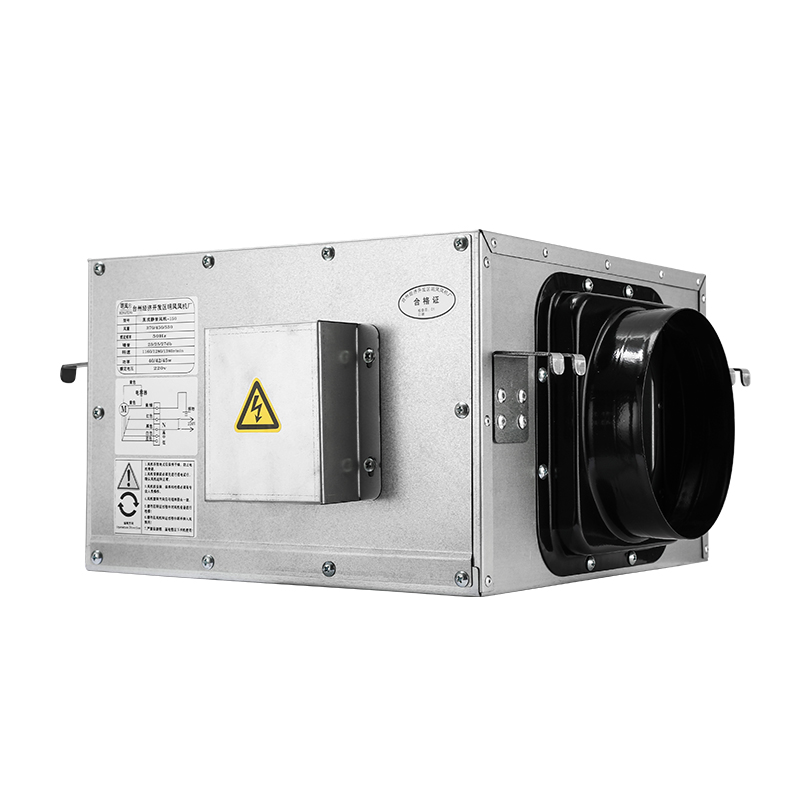
The first step is determining how much outdoor air the application actually requires. Office buildings, workshops, commercial spaces, warehouses, and other facilities have different occupancy patterns and ventilation requirements. Selecting a fan based only on its physical size can create problems if the actual airflow and pressure requirements are not considered.
Engineers should evaluate the required airflow, available installation space, duct arrangement, operating hours, and system resistance before selecting a fresh air ventilation fan. This provides a more useful basis for comparing different models and configurations.
Airflow alone does not describe how a ventilation fan will perform after installation. Filters, ducts, grilles, dampers, bends, and other components create resistance that the fan must overcome.
A fan with an appropriate pressure range can maintain the required airflow under the actual system conditions. During project planning, buyers should therefore provide manufacturers with as much information as possible about the intended duct system and operating conditions instead of selecting equipment solely from a catalogue airflow figure.
Increasing outdoor airflow is not automatically the best solution for every building. The quality of incoming outdoor air, occupancy levels, pollutant sources, and ventilation distribution all influence the final indoor environment. The U.S. Department of Energy notes that mechanical ventilation can remove indoor contaminants when outdoor air is appropriately filtered.
For this reason, fresh air fans may form only one part of a complete ventilation system. Filtration, exhaust equipment, sensors, controls, and air distribution can all affect the result. Manufacturers and system designers should consider how these components work together.
Buildings are rarely occupied at exactly the same level throughout the day. Meeting rooms, offices, workshops, and commercial areas can experience significant changes in occupancy and operating conditions.
Demand-controlled ventilation is attracting attention because airflow can be adjusted according to factors such as occupancy or indoor CO₂ levels. A 2026 office-building study examined different CO₂ control strategies and found that control settings affected both indoor air quality and HVAC energy performance. For buyers, this highlights the value of considering fan control and system integration during the specification stage.
A procurement team should evaluate the complete operating requirement rather than comparing only motor power or external dimensions. Important questions include:
Clear answers to these questions help manufacturers recommend a configuration that is better matched to the application.
For overseas distributors, contractors, and OEM buyers, a suitable sample is only the beginning of the purchasing process. Repeat orders need consistent dimensions, motor specifications, materials, assembly quality, and performance characteristics.
As a manufacturer, we treat production control and testing as important parts of fan manufacturing. Product inspection should cover relevant components and operating functions before shipment, while technical communication should remain clear throughout customization and repeat orders. This is particularly important when fans are integrated into larger ventilation systems where inconsistent components can complicate installation and maintenance.
The role of a fresh air fan should be considered within the complete ventilation strategy rather than as an isolated product. Current engineering research continues to examine ways of balancing outdoor-air delivery, indoor air quality, and energy performance, including demand-based ventilation and energy-recovery approaches.
For contractors, distributors, and engineering companies, working directly with a Fresh Air Fan Factory can make it easier to discuss airflow, pressure, installation conditions, controls, and customization before production. A properly matched fresh air fan can then become part of a ventilation solution designed around the actual needs of the building rather than a generic specification.


 Add: Plot 23, Huanglang Industrial Zone, Jinqing Town, Luqiao District, Taizhou City, Zhejiang Province
 Email: 39489814@qq.com
 Phone: +86-13586083215
Guided by our vision to "become the benchmark industrial fan creator and manufacturer," we have consistently innovated and advanced to establish our current industry leadership position.
Copyright © Taizhou Jiucang Electromechanical Co., Ltd.
All Rights Reserved.

China Large Silent Fans
