
 English
 English
 عربى
عربى 한국어
한국어
Industrial Wall Mounted Oscillating Fan
The Industrial Wall Mounted Oscillating Fan is a versatile and efficient cooling...
 Add: Plot 23, Huanglang Industrial Zone, Jinqing Town, Luqiao District, Taizhou City, Zhejiang Province
 TEL: +86-13586083215
Taizhou Jiucang Electromechanical Co., Ltd.
Selecting ventilation equipment for a building or industrial space often starts with one question: how much air needs to be moved? While airflow is important, it is not the only factor that determines whether a fan is suitable for the application. Overseas HVAC buyers, engineering teams, and equipment distributors also need to consider installation conditions, pressure requirements, operating noise, energy use, maintenance access, and control methods. For buyers working with a Fresh Air Fan Factory, defining these requirements before production can make equipment selection more accurate and reduce problems during installation.
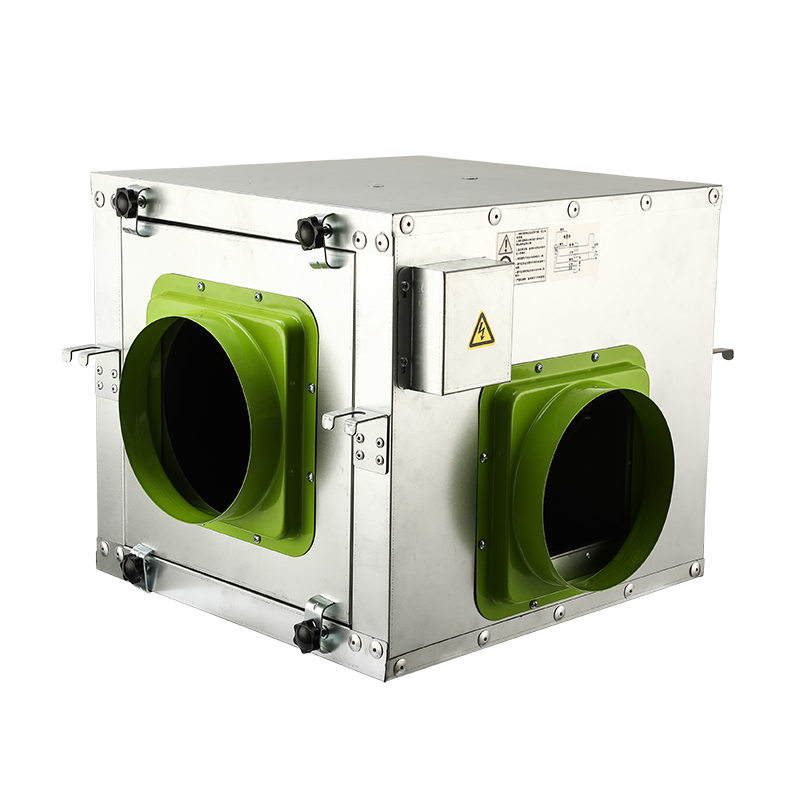
Different spaces have different ventilation demands. A workshop, commercial room, warehouse, equipment area, or enclosed working space may require a different approach depending on its size, layout, occupancy, and internal heat or air conditions.
Instead of choosing a fan simply because its rated airflow looks suitable, buyers should first explain the intended application to the manufacturer. The manufacturer can then evaluate the operating conditions and recommend a configuration that matches the actual ventilation task.
This application-based approach is particularly useful when the fan will operate as part of a larger ventilation system.
Air does not move through a ventilation system without resistance. Duct length, bends, filters, grilles, dampers, and other components can influence the pressure required for the fan to maintain the intended airflow.
A fan selected only according to free-air performance may not deliver the same result after installation into a complete system. Engineers should therefore provide relevant duct and system information when requesting equipment.
From a manufacturing perspective, understanding the complete air path helps determine whether the proposed fan configuration is appropriate for the working conditions.
Physical installation conditions can influence fan selection just as much as airflow requirements. Available space, mounting direction, access for maintenance, connection position, and surrounding equipment should be considered before the final configuration is confirmed.
For example, a compact installation area may require a different housing arrangement from an open mechanical space. Buyers should provide drawings or installation dimensions when possible so the manufacturer can evaluate the equipment in relation to the actual site.
Good planning at this stage can reduce unnecessary modifications after delivery.
The surrounding environment also matters. Temperature, humidity, dust, airborne particles, and operating frequency can affect the appropriate fan configuration and material selection.
A manufacturer should understand where the fan will be installed rather than treating every ventilation project as the same. Buyers can provide information about indoor conditions, outdoor exposure, or any unusual environmental factors that may influence the equipment.
This allows the product specification to be developed around the application instead of relying on a general-purpose configuration.
A ventilation system should move air without creating unnecessary disturbance in the intended environment. Noise requirements can be particularly relevant in areas where people work, communicate, rest, or remain for extended periods.
When selecting a fresh air ventilation fan, buyers should discuss the expected operating environment and duty cycle with the manufacturer. Fan structure, operating speed, installation method, and surrounding conditions can all influence the final sound experience.
Considering this requirement before production is more practical than attempting to solve an unsuitable configuration after installation.
A fan may operate for long periods, so maintenance should not be treated as an afterthought. Engineers and facility teams need reasonable access to the components that require inspection, cleaning, adjustment, or replacement.
Before ordering, buyers can confirm:
A clear maintenance plan can make the ventilation system easier to manage after commissioning.
For overseas buyers, choosing a Fresh Air Fan Factory is not simply about comparing product photographs or a single airflow figure. The manufacturer should understand the intended application, installation environment, system resistance, operating conditions, and maintenance requirements before the final specification is confirmed.
When these factors are considered together, buyers can select fresh air ventilation equipment with a clearer purpose and fewer assumptions. A manufacturer with practical production experience can also use these requirements to guide configuration, customization, inspection, and delivery. This makes the Fresh Air Fan Factory an important part of the equipment selection process rather than simply the final production source.


 Add: Plot 23, Huanglang Industrial Zone, Jinqing Town, Luqiao District, Taizhou City, Zhejiang Province
 Email: 39489814@qq.com
 Phone: +86-13586083215
Guided by our vision to "become the benchmark industrial fan creator and manufacturer," we have consistently innovated and advanced to establish our current industry leadership position.
Copyright © Taizhou Jiucang Electromechanical Co., Ltd.
All Rights Reserved.

China Large Silent Fans
