
 English
 English
 عربى
عربى 한국어
한국어
Industrial Wall Mounted Oscillating Fan
The Industrial Wall Mounted Oscillating Fan is a versatile and efficient cooling...
 Add: Plot 23, Huanglang Industrial Zone, Jinqing Town, Luqiao District, Taizhou City, Zhejiang Province
 TEL: +86-13586083215
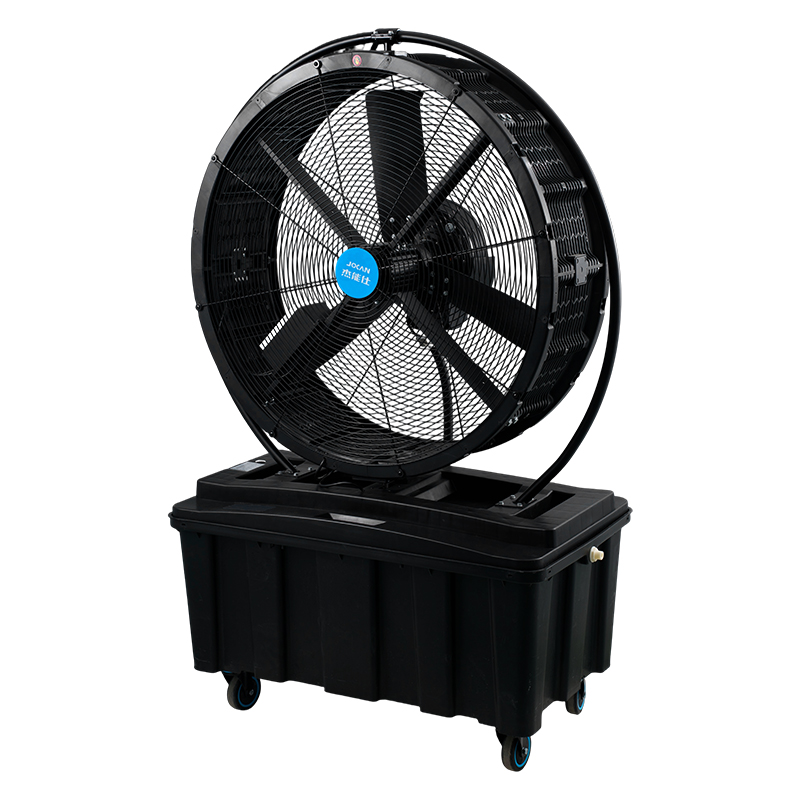
Market demand for controlled cooling and humidity management continues to grow across professional sectors where environmental stability directly affects productivity and safety. Water Mist Fan systems developed alongside large-scale airflow solutions from an Industrial Ceiling Fans Factory are increasingly being specified in greenhouse agriculture and outdoor construction environments. These B2B applications are characterized by clear operational necessity and relatively low price sensitivity, since performance impacts crop yield, worker safety, and project timelines. Rather than being considered optional seasonal equipment, mist-assisted airflow systems are becoming functional infrastructure in these industries.
Modern greenhouse operations rely on consistent temperature and humidity control to support plant growth cycles. Excess heat accumulation under transparent roofing structures can stress crops, slow growth, and reduce overall output. At the same time, humidity levels must be managed carefully to prevent fungal development while maintaining transpiration balance.
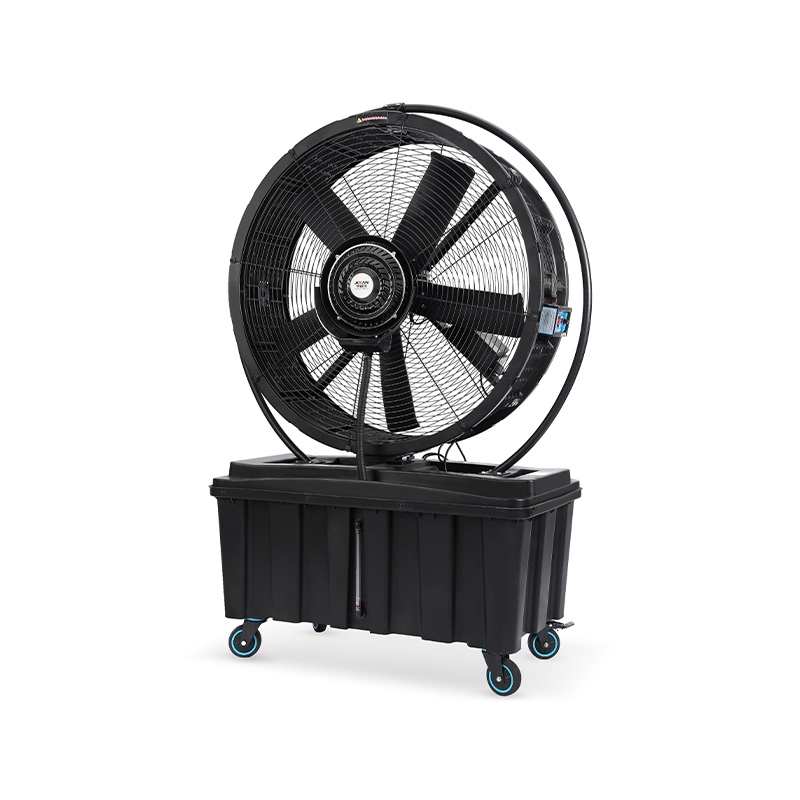
A Water Mist Fan installed within a greenhouse structure contributes to both air movement and evaporative cooling. The airflow generated by large-diameter ceiling or suspended fans helps distribute temperature evenly throughout the planting area, reducing localized hot spots. When paired with fine mist atomization, the system supports gradual cooling through evaporation without soaking plant surfaces.
Unlike traditional sprinkler cooling, which directly wets foliage, high-pressure mist creates small droplets that evaporate in the air column before settling. This approach lowers air temperature while limiting excess leaf moisture. For precision agriculture operations growing vegetables, herbs, or nursery plants, this balance is important. Too much surface moisture can increase disease risk; too little humidity can cause plant stress and irregular growth.
Integration with environmental sensors allows operators to adjust mist volume based on real-time temperature and humidity readings. During peak midday heat, mist intensity can increase moderately. During cooler mornings or evenings, airflow alone may be sufficient. This flexible response supports consistent greenhouse conditions without introducing unnecessary water usage.
For growers evaluating installation, attention should be given to ceiling height, plant density, ventilation openings, and irrigation layout. Mist lines should be positioned to complement, not interfere with, existing drip or hydroponic systems. Water filtration is also essential in agricultural environments, as mineral buildup may affect nozzle performance over time.
Construction sites expose workers to direct sunlight, radiant heat from materials, and limited natural shade. Heat stress is not only a health concern but also a productivity issue. Regulations in many regions now require employers to implement heat mitigation measures during high-temperature periods.
Deploying Water Mist Fan units around high-activity zones such as concrete pouring areas, steel assembly stations, or equipment staging zones can help moderate perceived temperature. Evaporative cooling lowers surrounding air temperature slightly while moving air across the skin enhances heat dissipation. This combination supports worker comfort without enclosing the space or restricting mobility.
Unlike portable air conditioning units, mist fans are adaptable to open environments. They can be mounted on temporary poles, scaffolding structures, or integrated with mobile platforms. For larger infrastructure projects, industrial ceiling fan systems may also be installed in semi-enclosed structures such as prefabrication workshops or covered staging areas. These large fans circulate air across wide surfaces, reducing stagnant heat pockets.
To ensure safe application on construction sites, several practical factors must be addressed:
When properly configured, mist-assisted airflow systems support compliance with occupational heat guidelines without requiring extensive structural modification. They provide an adaptable approach for contractors managing fluctuating site conditions.


 Add: Plot 23, Huanglang Industrial Zone, Jinqing Town, Luqiao District, Taizhou City, Zhejiang Province
 Email: 39489814@qq.com
 Phone: +86-13586083215
Guided by our vision to "become the benchmark industrial fan creator and manufacturer," we have consistently innovated and advanced to establish our current industry leadership position.
Copyright © Taizhou Jiucang Electromechanical Co., Ltd.
All Rights Reserved.

China Large Silent Fans
