
 English
 English
 عربى
عربى 한국어
한국어
Industrial Wall Mounted Oscillating Fan
The Industrial Wall Mounted Oscillating Fan is a versatile and efficient cooling...
 Add: Plot 23, Huanglang Industrial Zone, Jinqing Town, Luqiao District, Taizhou City, Zhejiang Province
 TEL: +86-13586083215
Taizhou Jiucang Electromechanical Co., Ltd.
When a ventilation system starts moving less air, producing unusual noise, or consuming more energy, replacing the entire unit is not always the right first step. Industrial Fans can experience performance changes for several reasons, including dust accumulation, mechanical wear, airflow resistance, installation conditions, and component imbalance. For engineers and maintenance teams, identifying the actual cause before ordering replacement equipment can prevent unnecessary costs and help restore stable ventilation performance.
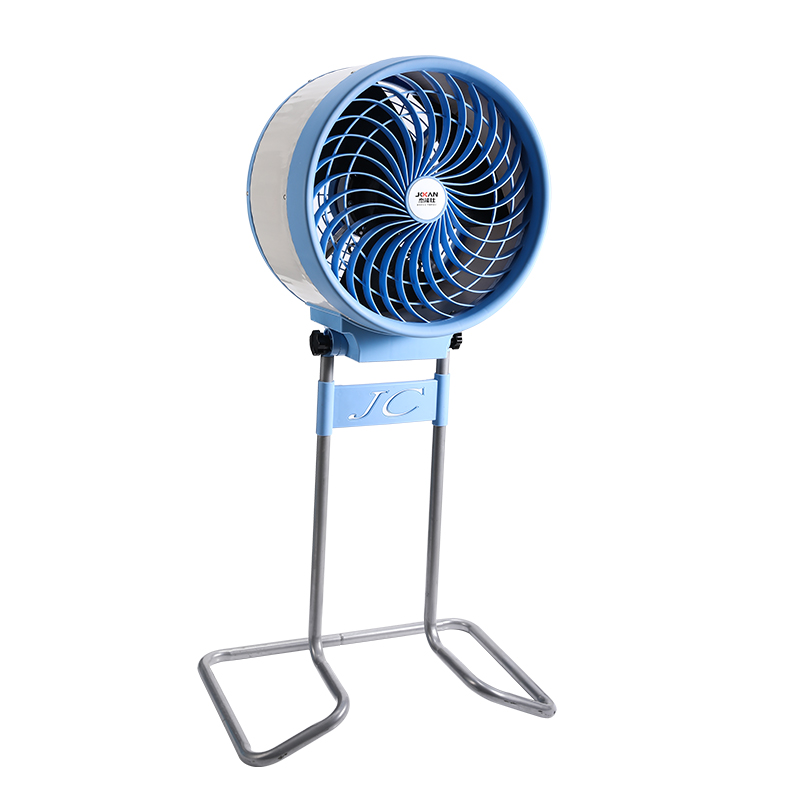
Industrial environments often expose ventilation equipment to dust, fibers, oil particles, moisture, or process residues. When these materials accumulate on the impeller, blades, housing, or protective components, the airflow path can gradually become less effective.
Dust buildup can also affect rotating components by changing the balance of the impeller. Instead of immediately increasing motor speed, maintenance teams should first inspect the fan internally and determine whether cleaning is required.
For applications with continuous dust exposure, manufacturers should also consider the transported medium when selecting the impeller structure, materials, and maintenance arrangement.
Unusual vibration, rattling, or changes in operating noise should not be ignored. These symptoms may indicate bearing wear, loose fasteners, shaft alignment problems, or other mechanical issues.
A practical inspection should examine:
Early inspection can help distinguish a component-level problem from a larger fan system issue. For industrial equipment operating for long periods, routine maintenance is part of maintaining predictable performance.
The impeller is one of the most important rotating components in a fan. If it becomes damaged, deformed, contaminated, or incorrectly installed, the resulting imbalance may create vibration and noise while placing additional stress on bearings and other components.
This is particularly important after cleaning, repair, or component replacement. The impeller should be checked for physical damage and correct installation rather than simply restarting the equipment after maintenance.
As a manufacturer, we pay attention to component balance and assembly accuracy because stable rotation directly affects operating reliability and service conditions.
Sometimes the fan itself is working correctly, but the ventilation system has developed additional resistance. Blocked filters, partially closed dampers, contaminated ducts, or changes to the duct layout can all influence airflow.
This is why troubleshooting should not stop at the fan housing. Engineers should evaluate the complete airflow path and compare current operating conditions with the original system design.
A pressure measurement at appropriate points can also help determine whether the problem comes from the fan or from increased resistance elsewhere in the system.
Even a properly manufactured fan can perform poorly if it is installed under unsuitable conditions. Insufficient clearance, poor alignment, unstable foundations, incorrect rotation direction, or inappropriate duct connections can affect airflow and mechanical stability.
During commissioning, installation teams should verify the fan's rotation, mounting condition, connection arrangement, and operating parameters. Correct installation also makes later maintenance easier and reduces the likelihood of recurring mechanical problems.
For OEM projects, providing installation information to the manufacturer at an early stage can help ensure that the fan configuration matches the actual site conditions.
There is no single maintenance schedule that fits every industrial facility. A fan operating in a relatively clean environment may require a different inspection approach from equipment handling dust, hot air, moisture, or process exhaust.
Maintenance planning should therefore consider the actual application, operating hours, transported medium, and accessibility of key components. Regular visual inspections, cleaning, lubrication where applicable, and checks for vibration or abnormal noise can provide useful early indications of developing problems.
Manufacturers can also support buyers by providing maintenance recommendations based on the intended operating conditions rather than relying only on generic service intervals.
When ventilation performance changes, replacing the fan immediately may solve the symptom without addressing the underlying cause. A structured troubleshooting process can first determine whether the issue is related to contamination, mechanical wear, airflow resistance, installation, or another operating condition.
For overseas buyers sourcing Industrial Fans, working with a manufacturer that can discuss application conditions, maintenance requirements, component construction, and technical parameters provides value beyond the initial equipment purchase. A well-designed fan should not only deliver the required airflow when new; it should also remain practical to inspect, maintain, and operate throughout its service life.


 Add: Plot 23, Huanglang Industrial Zone, Jinqing Town, Luqiao District, Taizhou City, Zhejiang Province
 Email: 39489814@qq.com
 Phone: +86-13586083215
Guided by our vision to "become the benchmark industrial fan creator and manufacturer," we have consistently innovated and advanced to establish our current industry leadership position.
Copyright © Taizhou Jiucang Electromechanical Co., Ltd.
All Rights Reserved.

China Large Silent Fans
